
Independent musicians and brand new startups:
Startups and musicians with big ideas, big talent, and shallow pockets suffer a lot of the same challenges.
- I have no...


If you're a drummer and you've ever tried to replicate the groove of your favorite song, chances are you've come across some kind of drum notation. Whether it's in sheet music format (full staff with a drum clef) or in tabulated out with o's x's, neither really feels intuitive.

Here at Linear Groove, we've been thinking.

Here's what we mean:
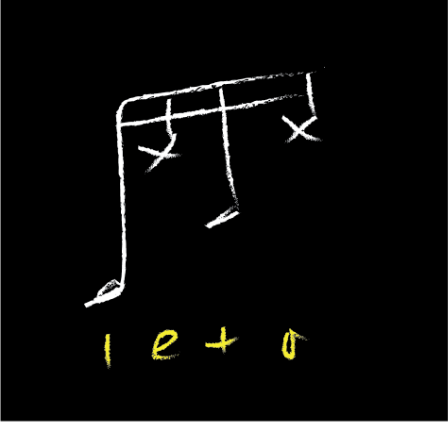
Drum tabs and beats transposed on a staff both tend to put heavy focus on the
number of drums and cymbals used over the course of the beat. In other words, they opt for very specific notation, dinstinguishing between toms, cymbals, and even types of strokes. If you happen to be looking to replicate a particular song or multi-bar phrase with 100% accuracy, either method works well. If you're simply looking for a way to read and write core drum beats, we're considering whether there's a much cleaner and simpler way to notate the backbone of any beat.

For your basic groove, you have three levels:
Each of these levels are best to think of as hits that will be filling the available "slots" on and between the numbers of the beats that we're dropping hits into. A basic rock beat can look something like this:
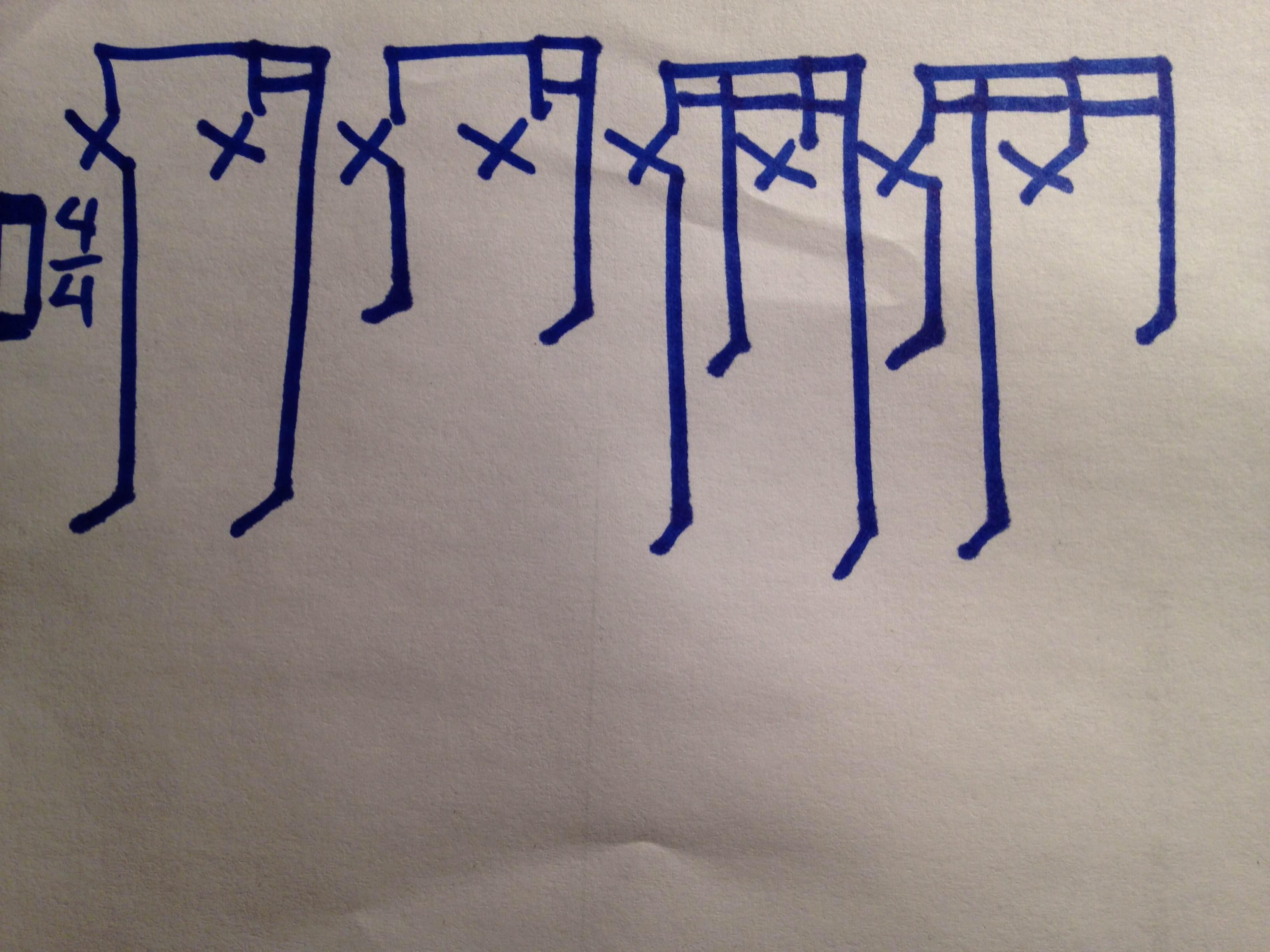
Rather than thinking of each slot tier as a 4-beat phrase, break up the beat into four clusters. There are a few advantages to looking at beats this way.

Startups and musicians with big ideas, big talent, and shallow pockets suffer a lot of the same challenges.
Drummers get a tough wrap.
If you were anything like us here at Linear Groove, you've heard your fair share of drumming myths. Some of them flattering, some of them...